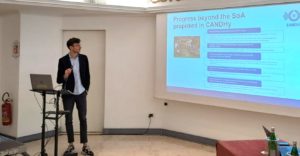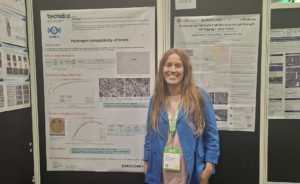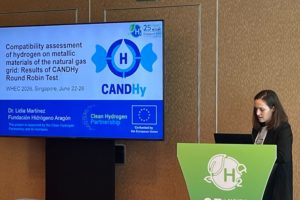
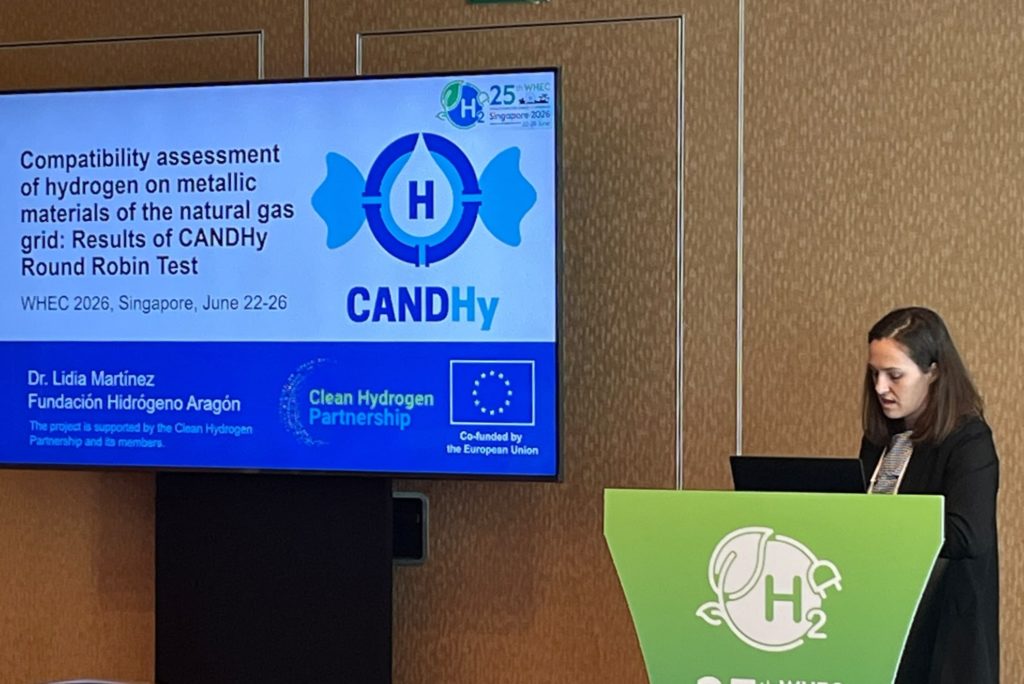
CANDHy project arrived at the World Hydrogen Energy Conference 2026 (WHEC 2026) to present the outcomes of its Round Robin (RR) testing campaign, a key milestone in advancing the understanding of hydrogen’s impact on metallic materials used in gas infrastructure. The results were presented by Lidia Martínez Izquierdo, R&D Coordinator at the Aragon Hydrogen Foundation, who outlined how the RR tests will build a more robust scientific basis for assessing material behaviour under hydrogen exposure
Before analysing the results of the RR tests, the presentation described the inventory of non-steel metallic materials used in the natural gas distribution network, providing an overview of the natural gas distribution network in Europe. More specifically, the presentation focused on the condition of the infrastructure in terms of materials, length-to-diameter, wall thickness, and accessories. The full report is available at this link.
Regarding the Round Robin tests, a central aspect was the collaboration among project partners. SIDSA was responsible for providing new materials and collecting old ones, while RINA led the preparation and post-test analysis of specimens. Testing activities were carried out across several facilities, including those of RINA, NaTran, TECNALIA Research & Innovation, and the Aragon Hydrogen Foundation, ensuring methodological consistency and comparability of results.
The campaign involved a total of 132 specimens, covering two categories of ductile iron: vintage materials (Spool 1 and Spool 3) and newly manufactured materials (ID1 and ID2). This combination enabled a comprehensive evaluation of material ageing and manufacturing differences in hydrogen-relevant conditions.
A wide range of mechanical and fracture mechanics tests was applied, including Slow Strain Rate Tests, fracture toughness measurements, C-ring stress tests, and CT-WOL/KIH crack growth tests. Together, these methodologies provide reproducible and reliable data for assessing hydrogen compatibility in gas distribution materials.
By combining harmonised testing procedures across multiple laboratories, CANDHy strengthens confidence in the assessment of infrastructure readiness for hydrogen. The project ultimately supports the future use of existing gas distribution networks for transporting hydrogen and hydrogen-natural gas blends, while ensuring material integrity and operational safety.